
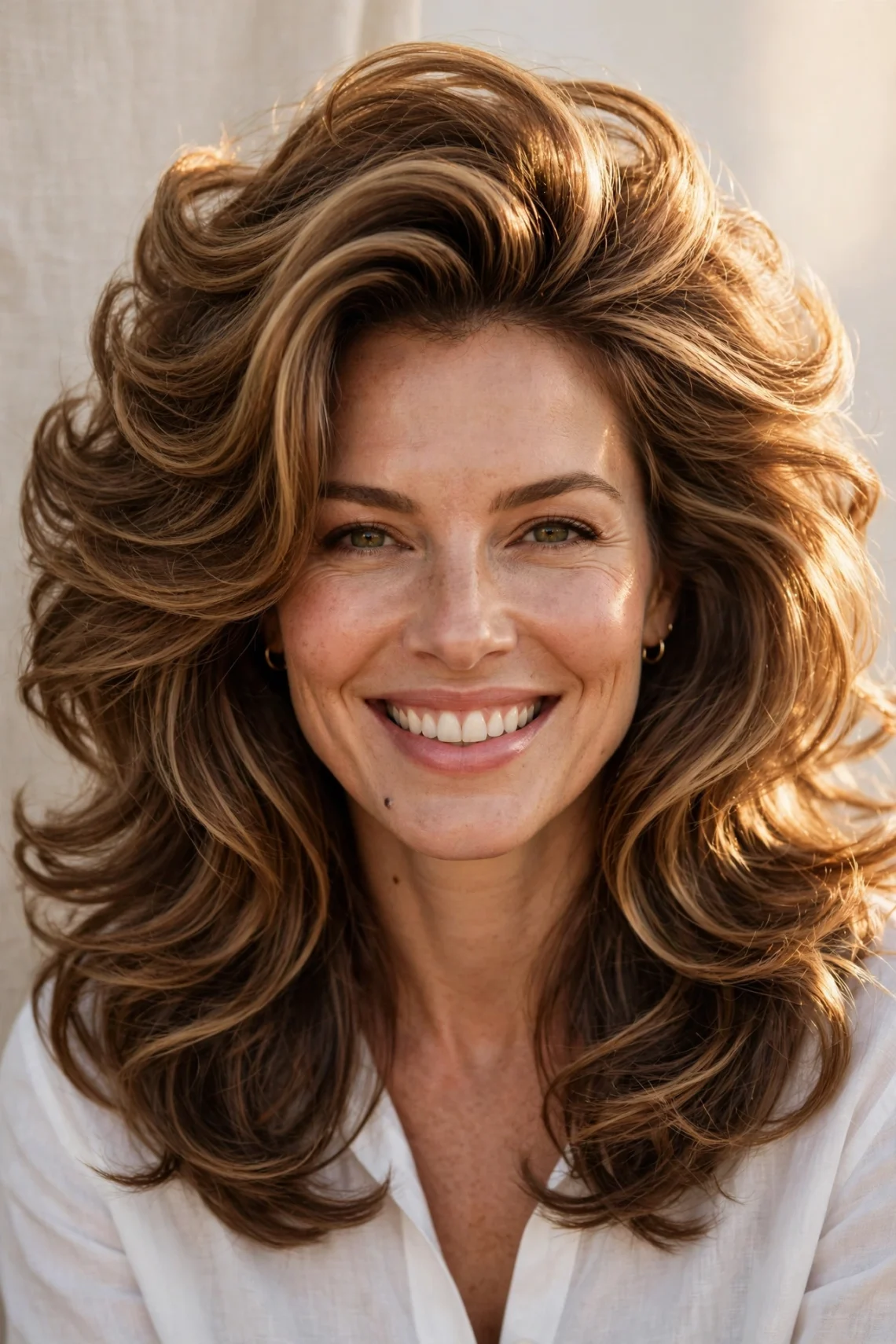
14 Hairstyles for Thin Hair That Add Instant Volume and Body
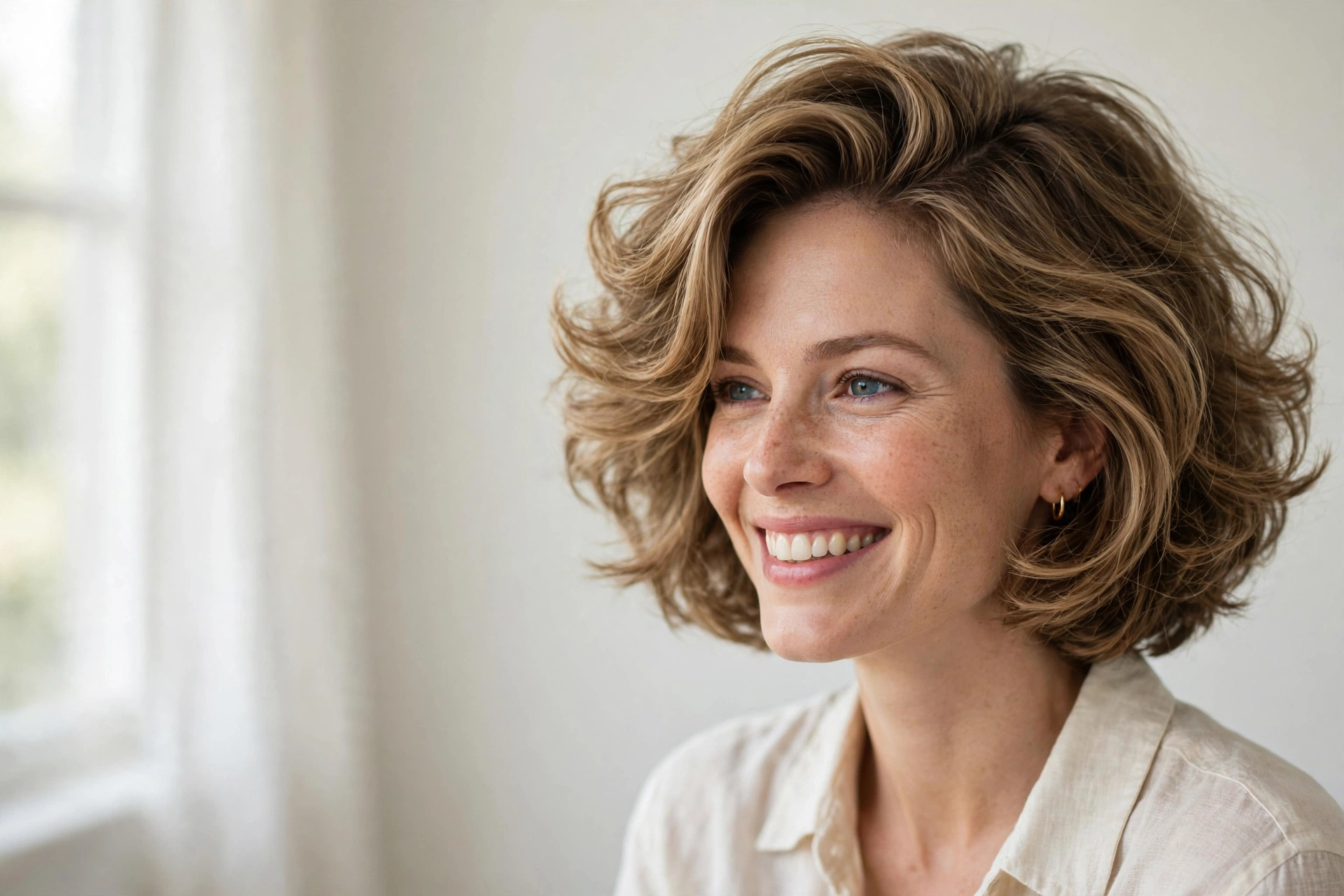
Fine, thin hair can feel like a daily battle — limp roots by noon, ends that disappear, and styles that fall flat no matter what you try. But here is the truth most people miss: thin hair is not the problem; the wrong cut and styling approach is. The right hairstyles for thin hair work with your texture instead of against it, using smart shapes, strategic layers, and root-lifting techniques to create the look of fullness. This guide rounds up fourteen gorgeous, volume-boosting ideas that make fine hair look thicker, bouncier, and healthier from every angle.
Before we dive in, it helps to know why these cuts work. Volume in fine hair comes from three things: dense-looking ends, lift at the roots, and texture through the mid-lengths. Blunt perimeters keep ends from looking stringy, while layers, teasing, and the right parting stop hair from lying flat against the scalp. Every idea below uses at least one of these principles, and most combine several for maximum impact. For more inspiration, explore these girl hairstyle ideas to adapt to thinner textures. Now let us find the look that gives your hair its fullest version.
Blunt Bob with a Deep Side Part
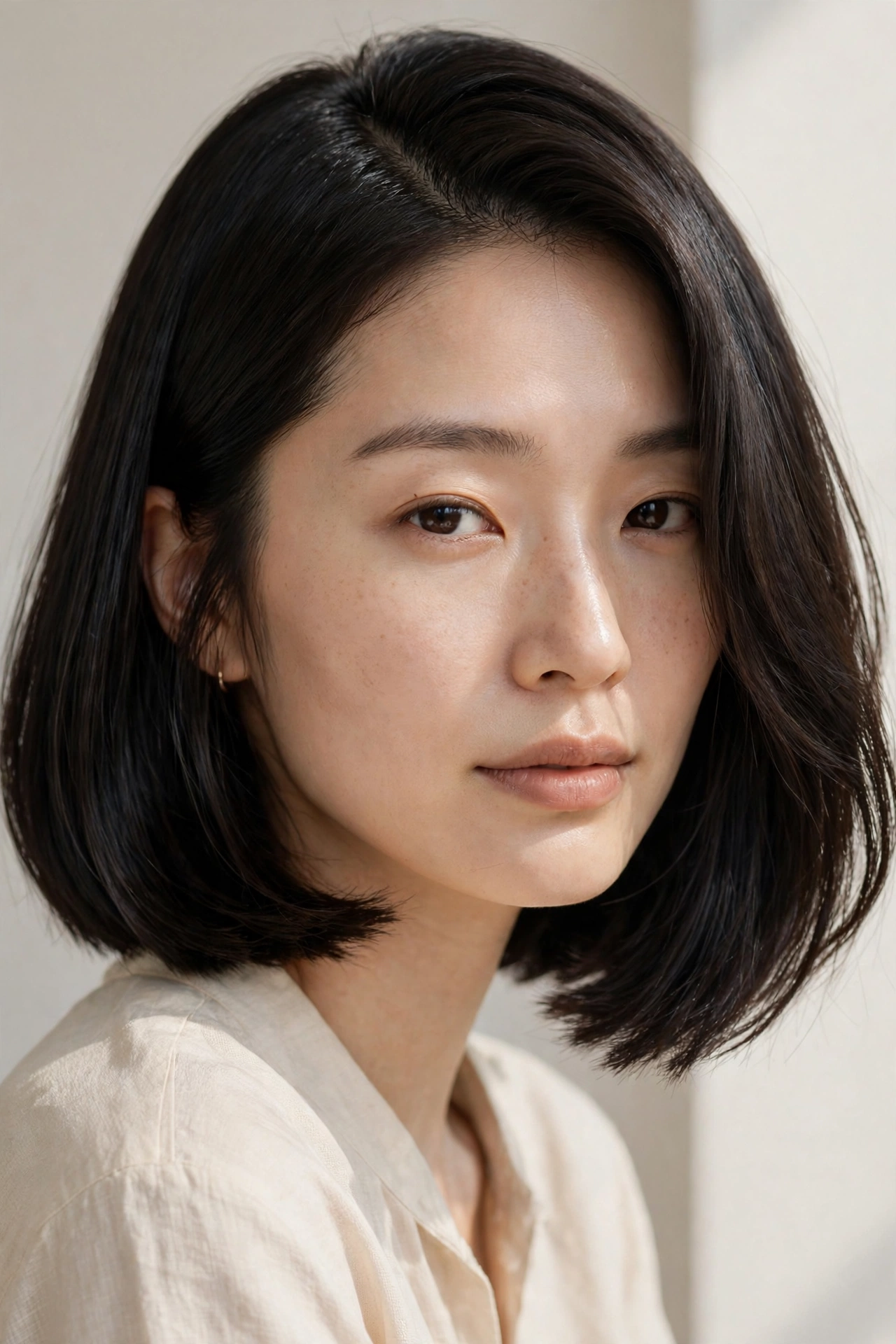
When it comes to hairstyles for thin hair, the blunt bob is one of the simplest and most effective tricks. Cut across at chin or jaw length with no layers, it creates a solid, thick-looking perimeter that makes fine strands appear instantly denser. The deep side part does the heavy lifting: sweeping most of your hair to one side builds natural lift at the roots and creates fullness exactly where thin hair tends to fall flat. Because every strand ends at the same point, the ends look plush rather than wispy, and the whole style reads polished with no effort.
Ask your stylist for a one-length cut that sits at the chin or just below, with the part carved deep on your preferred side. At home, blow-dry with a round brush, lifting sections upward at the root for extra body, then finish with a lightweight volumizing spray — heavy serums drag fine hair down. Tuck one side behind the ear for an asymmetric, modern edge, or add a subtle bend with a flat iron for soft movement. Trim every six to eight weeks, since blunt ends stay thick-looking only when freshly cut and even slight growth thins the perimeter.
Textured Pixie with Choppy Layers
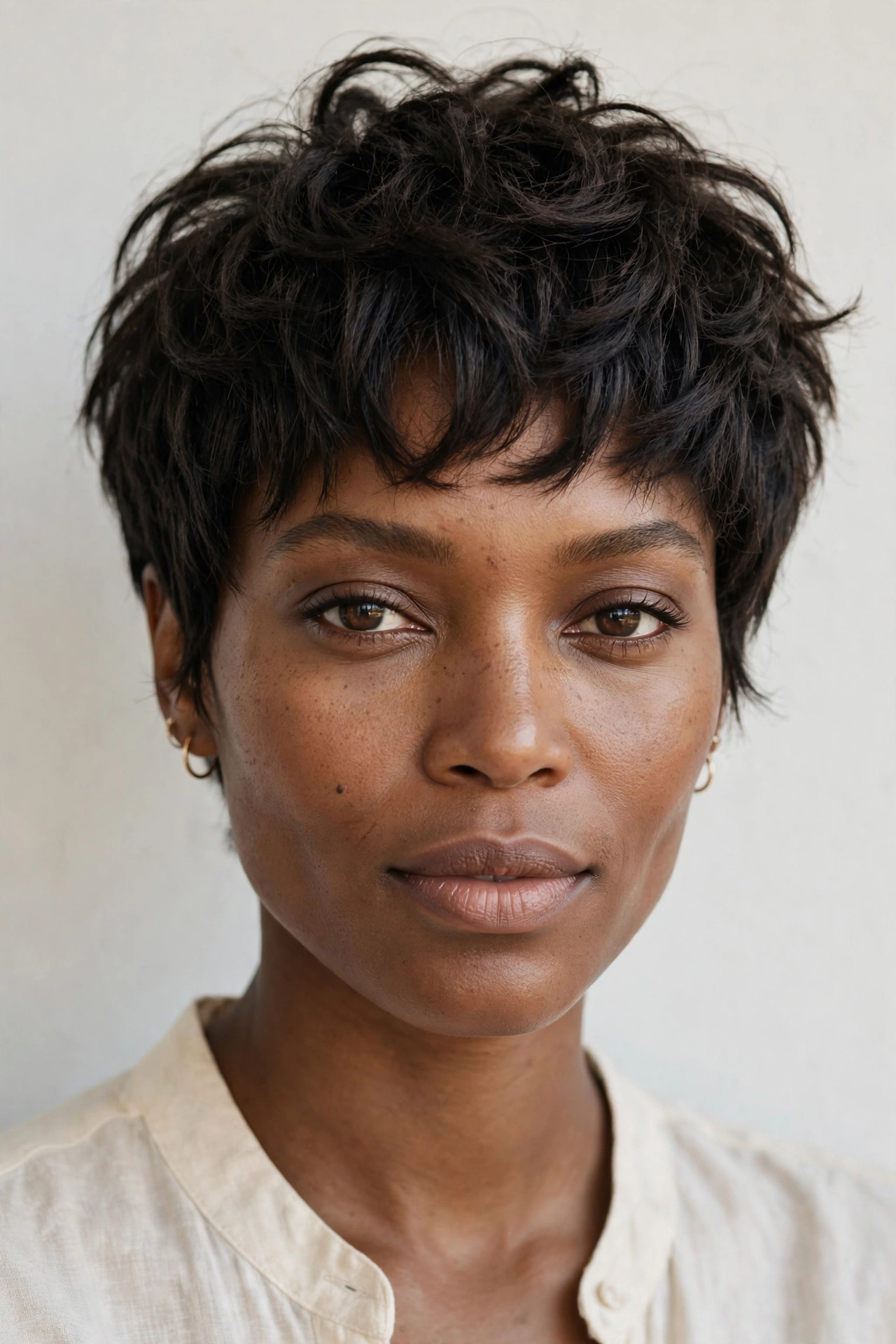
A pixie removes the very weight that pulls thin hair flat, and choppy texture is what makes this short cut look full instead of sparse. By cutting varied lengths through the crown and top, your stylist creates separation and movement that tricks the eye into seeing density. The shorter sides keep the silhouette neat while the longer, piece-y top gives you something to lift, tousle, and direct for instant volume. It is a bold choice, but for very fine hair it often looks thicker than any long style ever could.
Style it with a pea-sized amount of texturizing paste or matte clay, working the product through damp or dry hair while pushing the top upward and forward. A blow-dryer with a small round brush adds even more lift at the roots — direct the heat upward and let the layers fall where they want. Grow-out stays graceful if you trim the sides every four weeks while letting the top gain length. Add subtle highlights through the crown, and the dimension alone will make your hair look twice as thick.
Layered Lob with Face-Framing Pieces

The lob — long bob — hits the sweet spot for thin hair: long enough to feel feminine, yet short enough that length does not drag the roots flat. Soft layers through the mid-lengths and ends create movement and the illusion of fullness, while face-framing pieces draw attention to your features instead of sparse ends. Keeping the layers long and blended, never choppy or over-layered, preserves a full perimeter, so the cut looks thick from every angle while still feeling light, fresh, and modern.
Blow-dry with a large round brush, rolling sections away from the face to build that airy, face-framing curve. A one-inch curling iron through the mid-lengths adds soft bends that make hair look denser — alternate directions for a natural finish. Use a root-lifting mousse on damp hair before drying, and keep heavy oils away from the roots. This cut grows out beautifully, needing only a trim every eight to ten weeks to keep the shape fresh and the ends looking full.
High Ponytail with a Teased Crown
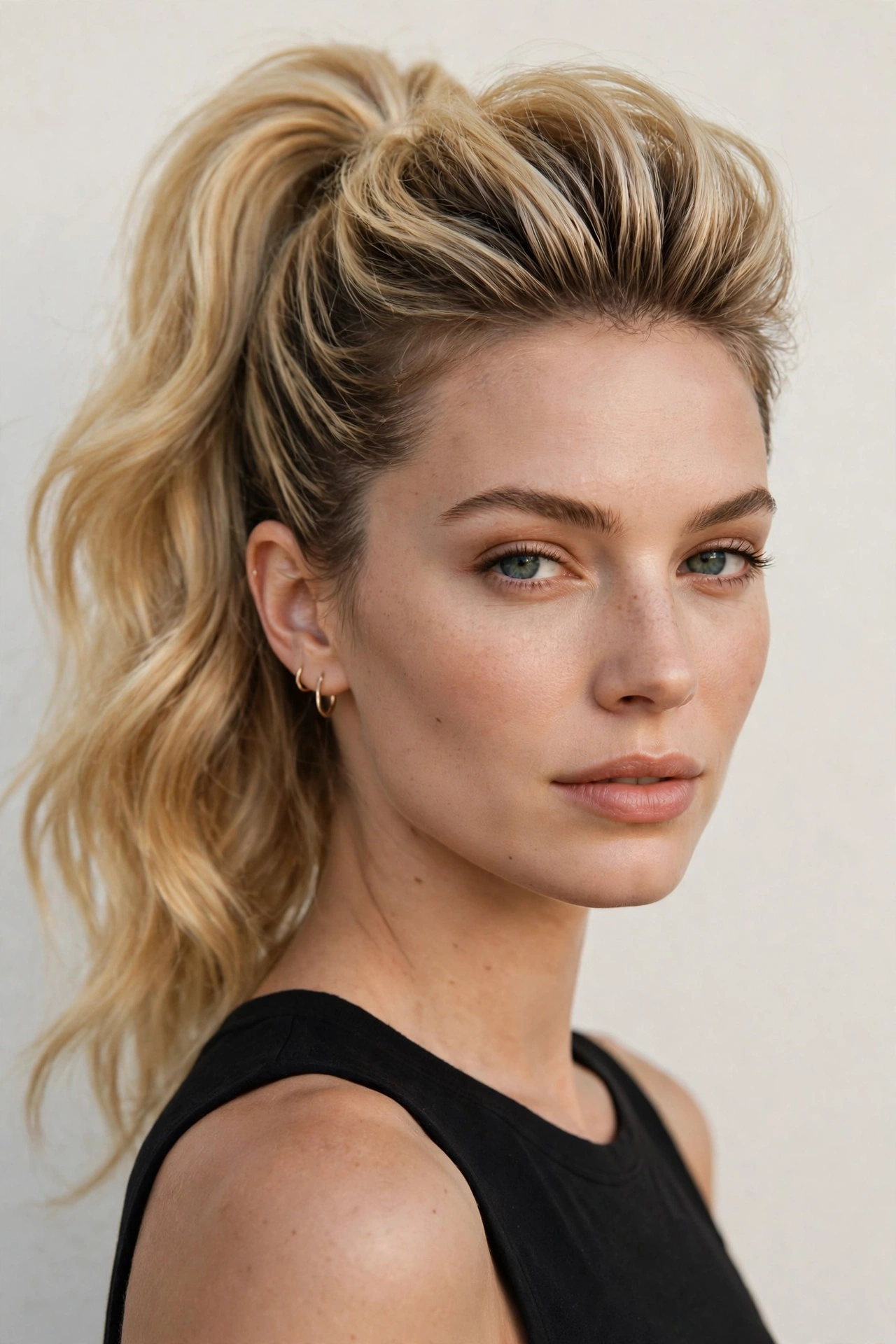
A high ponytail is practically a volume cheat code for thin hair. Gathering everything up and back pulls the sides sleek while letting you build serious height at the crown through gentle teasing. Backcombing just the under-layers at the crown creates a cushion of volume that the smooth top layer hides, so the lift looks completely and effortlessly natural. The ponytail itself looks thicker too, since all your hair is concentrated in one place instead of spread thin across your shoulders.
Flip your head upside down and gather your hair high, securing it with a snag-free elastic. Before smoothing the top, insert a comb at the crown and push small sections downward two or three strokes to tease, then lightly smooth the surface. Wrap a small strand around the elastic to hide it for a polished finish. Mist with a flexible-hold hairspray — never a stiff formula that makes fine hair look crunchy. For extra thickness, loosely curl the ponytail ends so they fan out beautifully.
Side-Swept Bangs with Soft Waves
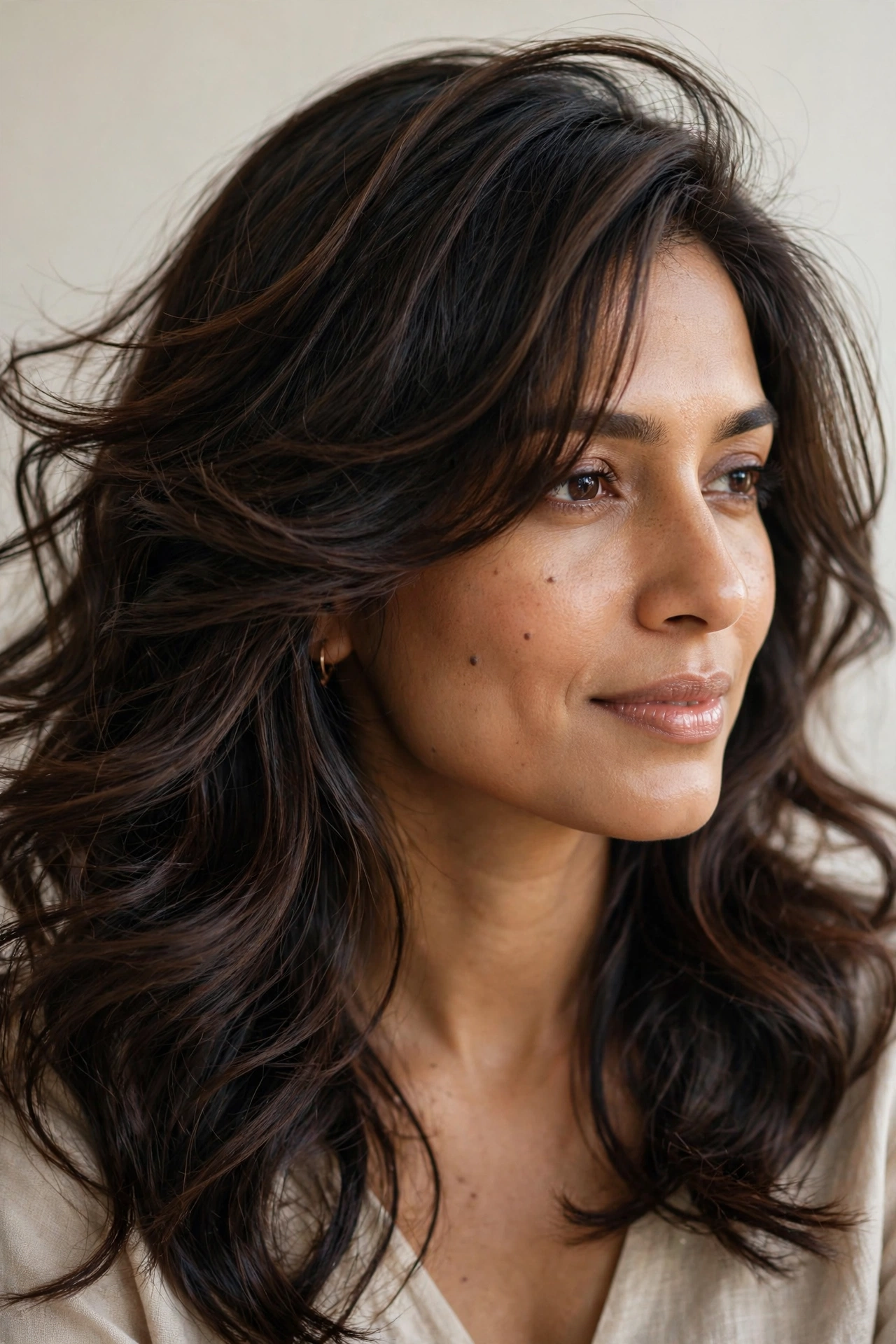
Side-swept bangs are a secret weapon for fine hair because they add density exactly where the eye looks first: the front. A deep, sweeping fringe across the forehead creates the impression of more hair up top, and when paired with soft waves through the lengths, the whole style gains movement that flat, straight fine hair lacks. The waves break the hair into bends and curves, and every bend catches the light differently, which reads as thickness and dimension. One salon visit is all it takes to see the difference.
Ask for bangs that start with a deep side part and sweep long across the forehead, blending into the lengths. Style with a round brush, directing the bangs to the side while blow-drying for a smooth, curved finish. Add waves with a curling wand, wrapping medium sections away from the face and letting them cool before touching. A light texturizing spray through the waves keeps them piece-y and full. Refresh the fringe with dry shampoo on day two to stop it from separating.
Curtain Bangs and a Bouncy Bob

Curtain bangs paired with a bouncy bob might be the most flattering combination for thin hair right now. The bangs frame the face with soft, parted pieces that add fullness around the forehead and cheekbones, while the rounded shape of the bob gives the ends a plush, full appearance. Because curtain bangs blend into the haircut rather than sitting as a separate block, they create seamless movement that makes fine hair look naturally abundant instead of obviously styled for volume.
Blow-dry curtain bangs with a round brush, rolling them away from the face on each side so they fall into that signature swoop. For the bob, dry with a large round brush tucked under at the ends to build the rounded, bouncy shape. A volumizing mousse at the roots before drying gives lasting lift. Curtain bangs grow out gracefully into face-framing layers, so you can stretch trims to eight weeks while the style keeps looking intentional and full. It is a low-effort routine with high-impact, lasting results.
Salon-Style Blowout Layers

Nothing makes thin hair look thicker than a proper bouncy blowout. Long, blended layers give the hair somewhere to go — each layer flips and curves over the one beneath it, stacking visual fullness through the mid-lengths and ends. The blowout technique itself, with tension and heat directed upward at the roots, creates lift that air-drying simply cannot match. It is the red-carpet secret for fine hair: all movement, all body, and zero extensions required. Ten focused minutes with a round brush and dryer are all it takes.
Start with a volumizing mousse on towel-dried hair, then rough-dry upside down until about eighty percent dry for maximum root lift. Switch to a large round brush, working in sections and rolling each one up and away for that bouncy curl. Cool every section with the dryer’s cool shot to lock the shape in place. Finish with a flexible hairspray misted from arm’s length. Sleep on a silk pillowcase and revive day-two roots with dry shampoo to stretch the blowout.
Stacked A-Line Bob

The stacked bob is engineered for volume: shorter layers at the nape graduate into longer front pieces, and that stacking pushes the hair outward and upward, creating automatic fullness at the back of the head. For thin hair, this graduated shape is magic because it concentrates density where fine hair needs it most — the crown and back — while the longer front keeps the cut modern and face-flattering. The angled silhouette looks thicker from the side and the back, the two views where thin hair usually looks sparsest.
Ask your stylist for stacked graduation through the back with the front pieces hitting at or below the chin. Style by blow-drying the back sections with a round brush, lifting straight up to emphasize the stacked volume. Smooth the front pieces under, or give them a slight bend for contrast. A pea-sized amount of smoothing cream on the ends keeps them polished without weighing the hair down. Because the shape is built into the cut, this style needs minimal daily effort to look full.
Root-Lifted Curly Shag
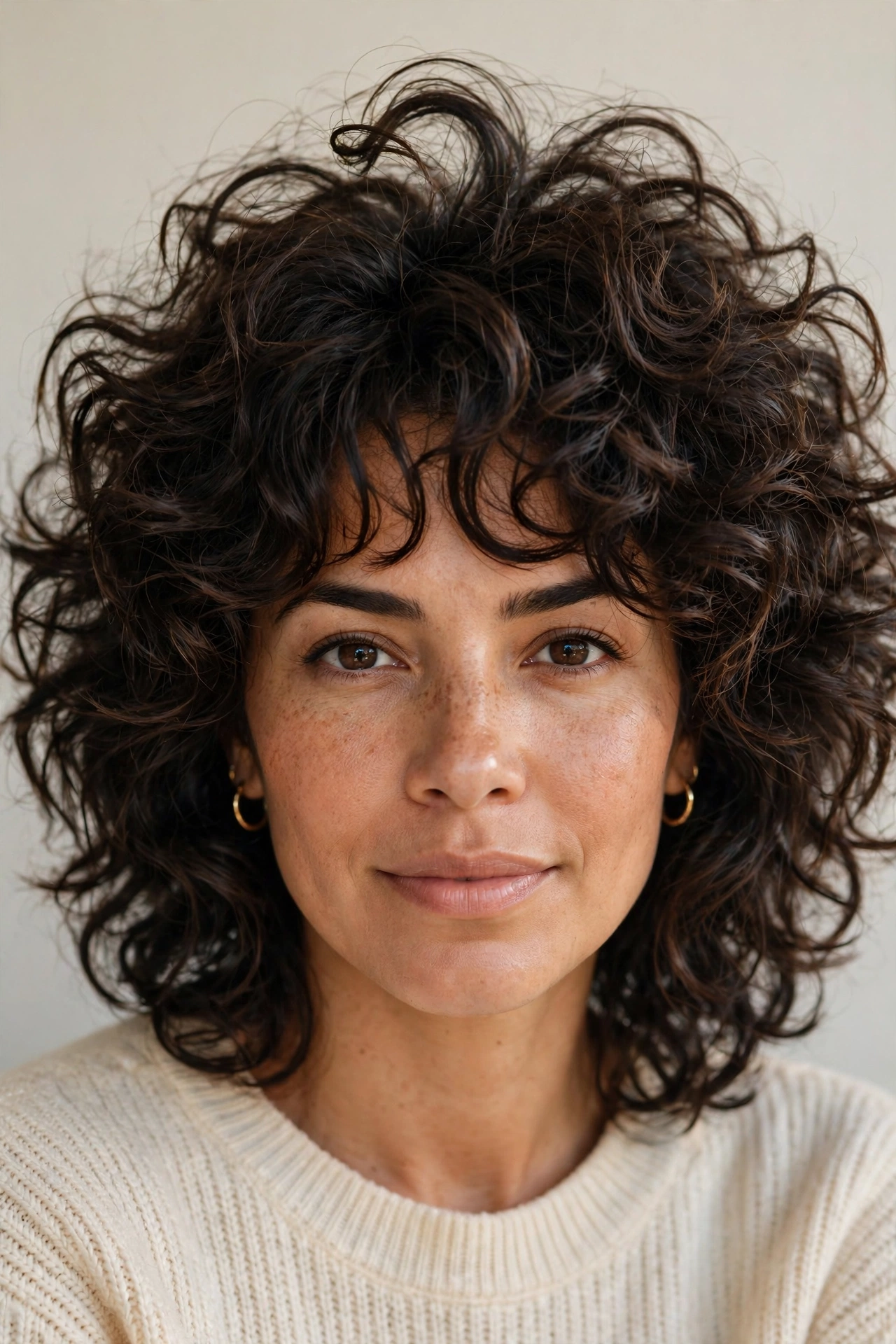
If your thin hair has natural wave or curl, a shag haircut turns that texture into serious volume. Short, choppy layers through the crown remove weight and let curls spring up instead of being dragged flat, while the shag’s signature disconnected layers create separation that reads as fullness. Lifting the roots — diffusing upside down or clipping the roots while the hair dries — multiplies the effect. Curls plus shaggy layers plus root lift is the holy trinity for fine curly hair that wants to look big.
Apply curl cream and a light mousse to soaking-wet hair, then diffuse upside down on medium heat to build root volume while defining the curls. Once dry, gently shake and lift the roots with your fingertips — never a brush, which breaks curl clumps apart. A pick at the crown adds extra lift without disturbing the curl pattern. Refresh second-day curls with a water-and-conditioner mist. Trim every eight to twelve weeks to keep the layers bouncy and the shape looking intentional.
Half-Up Bouffant Twist
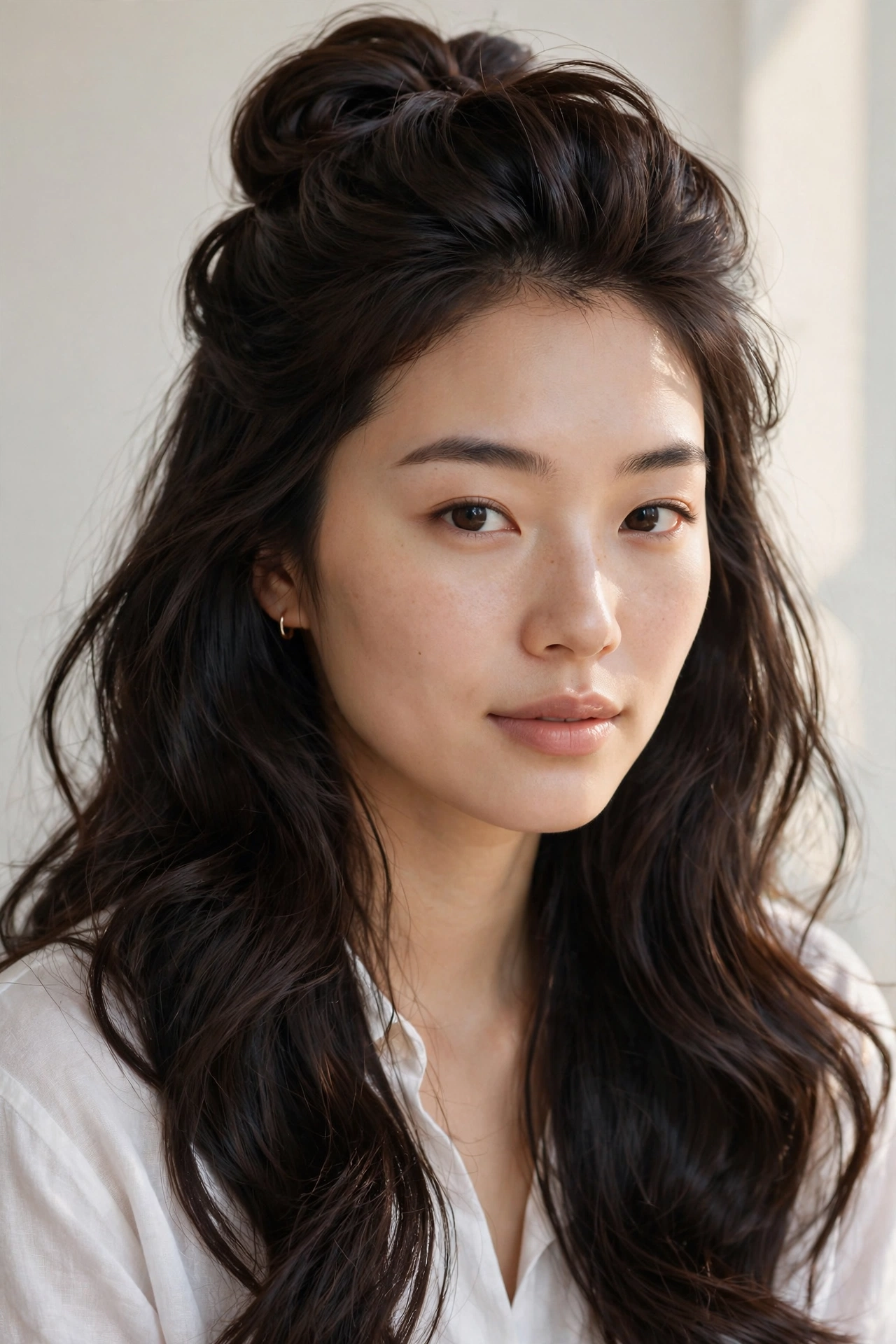
The half-up bouffant gives you the best of both worlds: the face-framing softness of wearing your hair down, plus dramatic crown volume that instantly makes thin hair look thicker. Teasing the crown section before twisting it back creates a pillowy lift that the eye reads as full, abundant hair. Because the top section is smoothed over the teasing, the volume looks completely natural — like you simply have more hair than you do. It works on medium to long fine hair and takes about five minutes.
Section off the top third of your hair from temple to temple. Tease the under-layers at the crown with two or three gentle strokes, then smooth the top layer over them. Twist the section once and pin it at the back of the crown, crossing bobby pins for extra hold. Leave the rest of the hair down, adding soft waves for even more fullness. A light mist of hairspray keeps everything in place. Pull a few face-framing pieces loose for a softer, romantic finish.
Wispy Feathered Mid-Length Cut
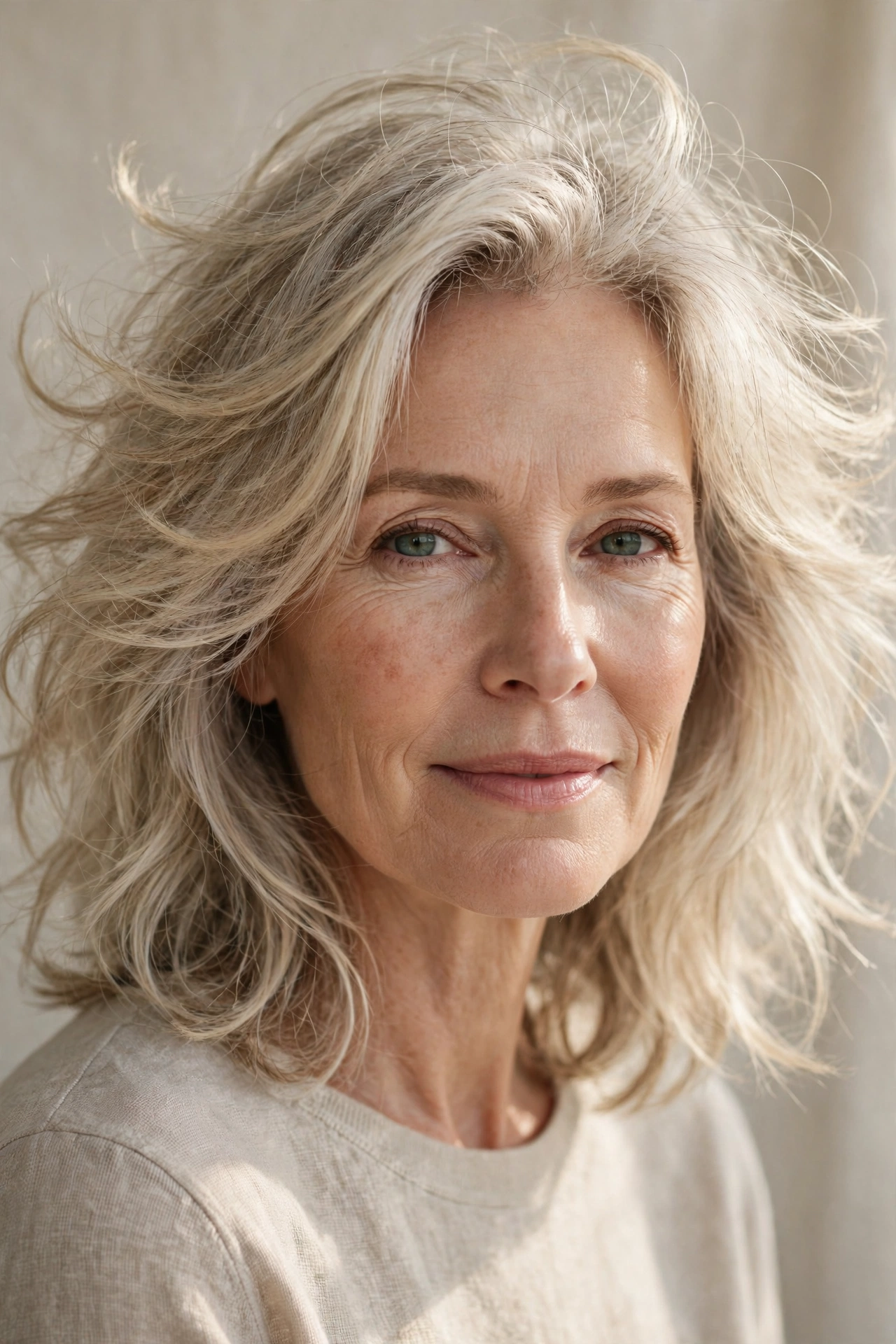
Feathering — those soft, flicked-out layers — might sound counterintuitive for thin hair, but done right it creates beautiful airy fullness. Wispy layers through the mid-lengths and ends flick outward instead of hanging straight down, which gives fine hair movement and the appearance of more body. Keeping the overall length at the collarbone or above prevents the dragging effect, and the feathered texture catches the light in a way that makes hair look dimensional and thick rather than flat and one-note.
Ask for soft feathered layers starting at the cheekbones, blended rather than chunky. Blow-dry with a medium round brush, flicking the ends outward and away from the face for that feathered flip. A light volumizing spray at the roots adds lift, while a tiny drop of shine serum just on the very ends keeps them from looking dry. This retro-inspired cut is wonderfully low-maintenance: the layers fall into place with minimal styling and look fuller with a bit of natural texture.
Tousled Beach Waves with Long Layers
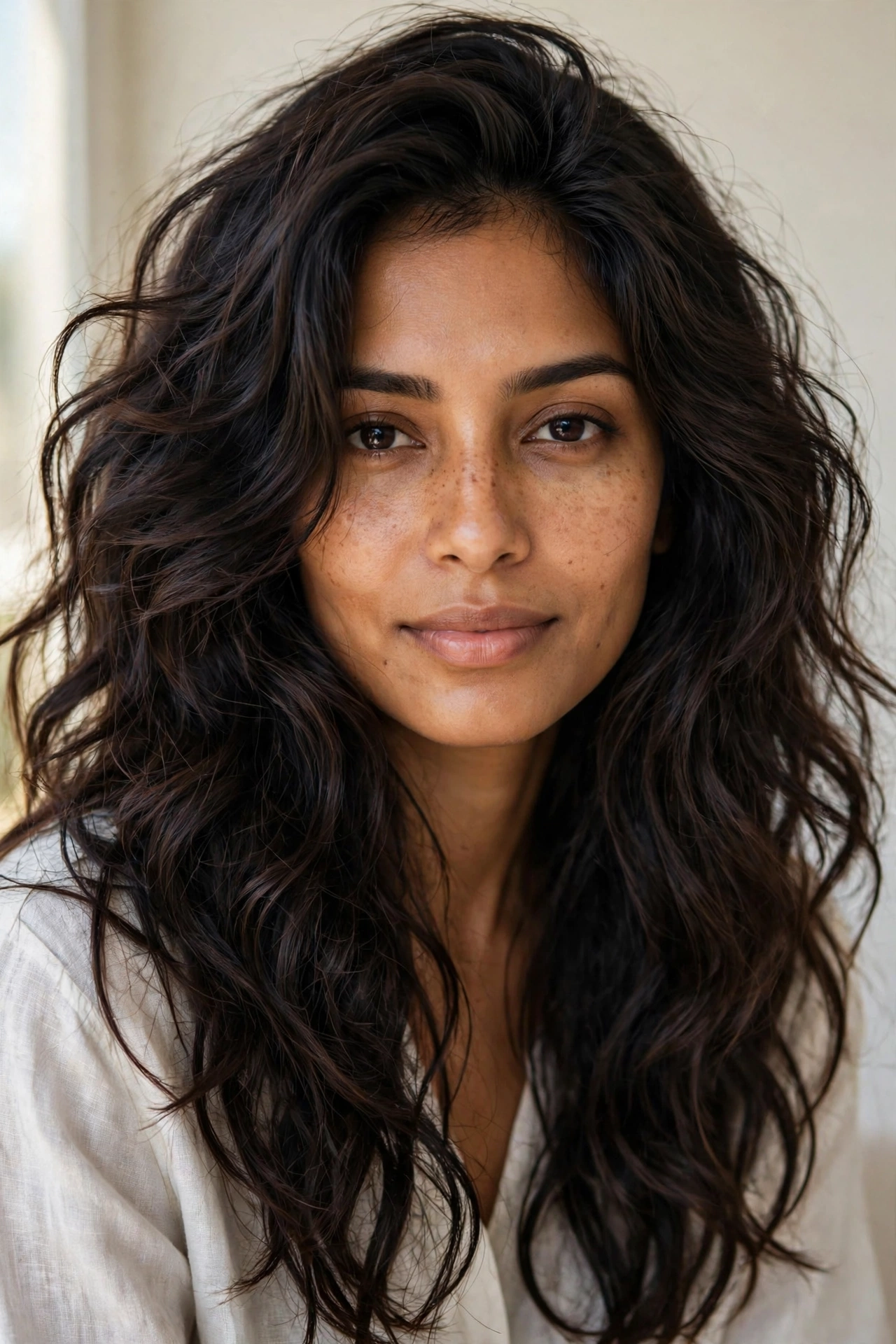
Beach waves are a volume illusion powered by texture. Each wave bends the hair, and every bend creates shadow and highlight that the eye interprets as thickness. Long layers keep the waves from looking bottom-heavy while removing just enough weight for the texture to hold. For thin hair, the tousled — not perfect — finish is key: slightly undone waves look naturally full, while over-defined curls can separate and expose a sparse scalp. Messy, in this case, genuinely means more.
Start with a salt spray or texturizing mist on damp hair and rough-dry for natural grit. Wrap one-inch sections around a curling wand, leaving the ends out for that undone feel, and alternate directions. Once cool, rake through with your fingers and scrunch gently to break the waves apart — this separation is what builds the full, tousled look. Finish with a flexible texturizing spray. Sleep in a loose braid to wake up with waves that need only a quick finger-comb.
Voluminous French Twist Updo
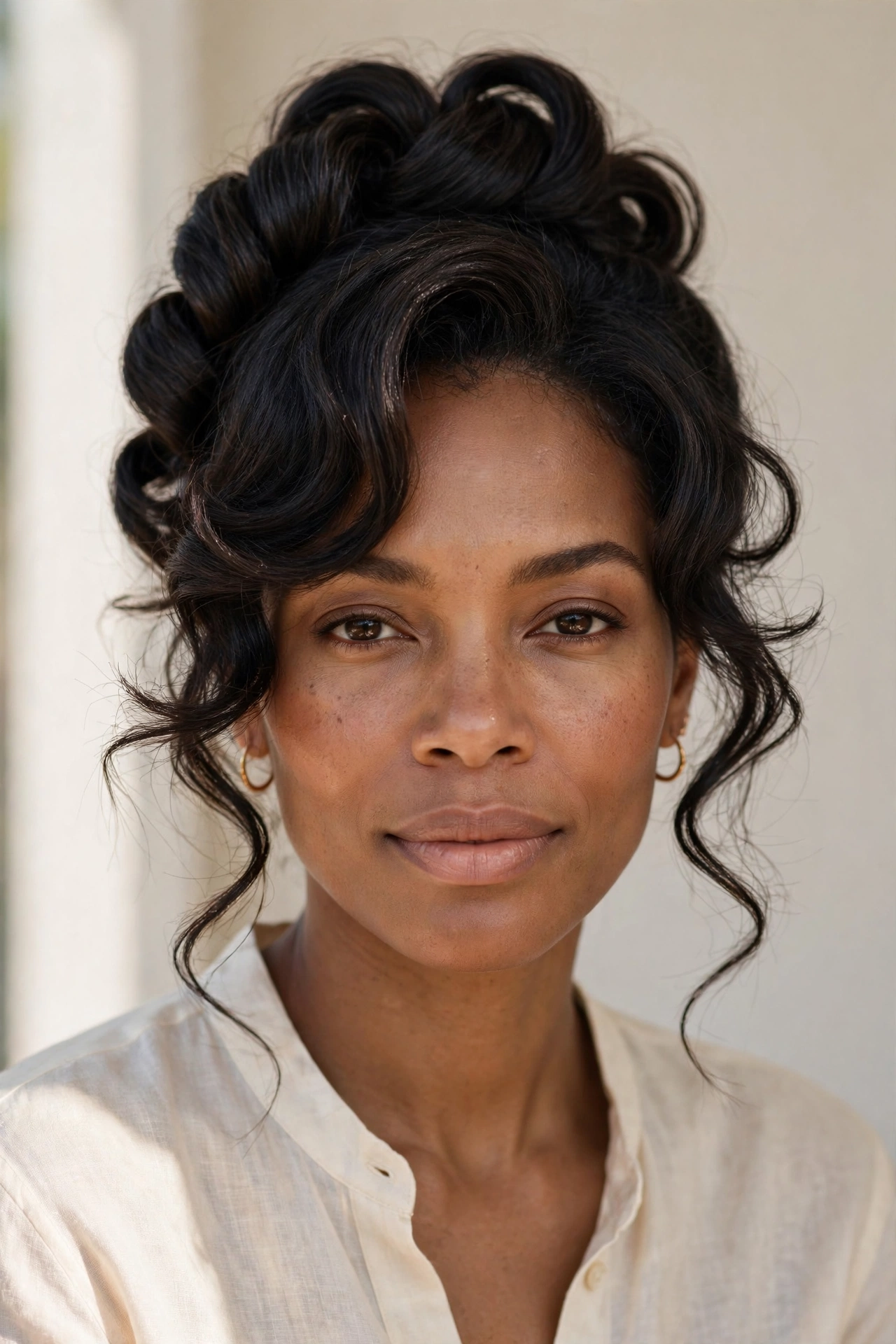
An updo might seem risky for thin hair, but a soft, voluminous French twist actually makes fine hair look remarkably full. The trick is texture before twisting: backcombing the crown and roughing up the lengths gives the hair grip and expands it, so the finished twist has softness and dimension instead of looking scraped flat. Gently pulling the twist apart after pinning — pancaking — widens it further. The result is elegant and full, perfect for weddings, work events, or any day you want polish.
Prep with a texturizing spray and tease the crown lightly for lift. Gather the hair low at the nape, twist upward, and tuck the ends into the twist, securing with bobby pins and a few U-pins. Once secure, gently tug small sections outward to widen and soften the twist — this pancaking step is what creates the fullness. Leave soft pieces around the face. Set with a medium-hold hairspray. The beauty of this style is that slightly imperfect, soft twists look fuller than sleek ones, so do not aim for perfection.
Crown Braid into a Low Voluminous Bun
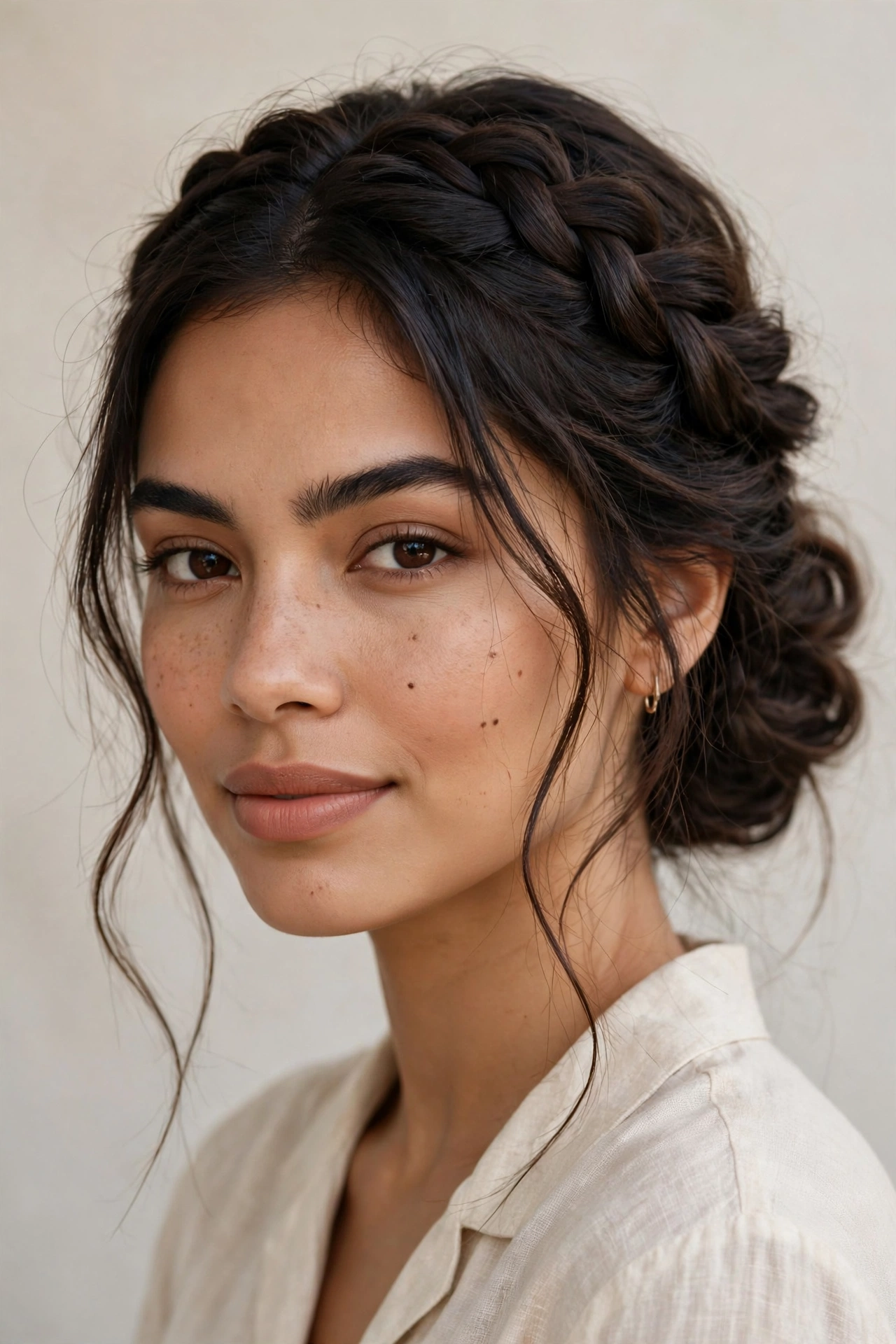
Braids plus buns are a double volume trick for thin hair. A crown braid across the front adds texture and width at the hairline, drawing the eye across a fuller-looking expanse of hair, while pancaking the braid — gently pulling its edges wider — makes it look substantially thicker than it is. Gathering everything into a low bun then concentrates all your hair into one plush shape. Teasing the ponytail before wrapping it into the bun adds the final cushion of fullness.
Create a deep side part and Dutch-braid along the hairline toward one ear, pancaking the braid as you go by tugging its outer edges. Gather the remaining hair — braid included — into a low ponytail at the nape. Tease the ponytail lightly, then wrap it loosely around its base and pin, leaving the bun soft and pillowy rather than tight. Pull a few wisps free around the face. Secure with pins and a light hairspray mist for a romantic, full-looking finish that lasts all day.


You May Also Like
18 Long Hair Hairstyle Ideas for Effortlessly Beautiful Locks

16 Fall Hairstyles for Women: Cozy Ideas You’ll Love This Season